


 Send Inquiry
Seed Sieve Shaker
MOQ : 1 Unit
Seed Sieve Shaker Specification
- Measuring Range
- Mesh sizes as per standard sieves (up to 2 mm to 10 mm)
- Display Type
- Dial timer with graduated markings
- Material
- Mild Steel
- Usage
- For Laboratory and Industrial Use
- Response Time
- Immediate mechanical operation
- Temperature
- Ambient
- Accuracy
- Depends on sieve mesh and sample preparation
- Interface Type
- Analog controls
- Power Supply
- 220V AC, 50 Hz
- Max Height
- Approx. 50 cm with rods
- Application
- Testing and grading of seeds and granular materials
- Specimen Size
- Suitable for all standard seed samples
- Product Type
- Shaker
- Automation Grade
- Semi-automatic
- Frequency
- 50 Hz
- Humidity
- Not Monitored
- Weight
- 5-15 Kilograms (kg)
- Number of Specimens
- 1 per test run
- Resolution
- Subject to sieve size granularity
- Equipment Type
- Seed Sieve Shaker
- Mounting Type
- Benchtop
- Operating Voltage
- 220V AC
- Test Range
- Up to 8 sieves stacked
- Features
- Rugged steel body, adjustable sieve holder, timer control
- Capacity
- Multiple sieves, up to 200 g seed
- Machine Weight
- Approx. 22 kg
- Test Speed
- Variable, up to 250 rpm
- Test Stroke
- Adjustable 25 mm amplitude
- Control Mode
- Manual/Timer
- Sieve Diameter Compatibility
- Usually 200 mm and 300 mm
- Material of Construction
- Mild steel painted body with stainless steel sieve holders
- Vibration Mechanism
- Gyratory action with variable amplitude
- Protection
- Overload protection for electric motor
- Color
- Blue
- Noise Level
- Less than 65 dB
- Timer Range
- Up to 60 minutes
Seed Sieve Shaker Trade Information
- Minimum Order Quantity
- 1 Unit
- Payment Terms
- Cash Advance (CA), Cash in Advance (CID)
- Supply Ability
- 10 Units Per Month
- Delivery Time
- 1-3 Week
- Main Export Market(s)
- Western Europe, Middle East, Eastern Europe, South America, Asia, Central America, North America, Australia, Africa
- Main Domestic Market
- All India
Seed Sieve Shaker About
Taking advantage of our profound experience and expertise in this domain, we are engaged in delivering a wide range of extraordinary Seed Sieve Shaker. These shakers are widely used in numerous botanical and agricultural research laboratories for grain dockage process. These shakers are designed from premium quality materials by using modern machinery. We offer our Seed Sieve Shaker at economical prices to our customers.
Features:
- Light weight
- Easy to operate
- Maintenance free
GA-231 SEED SIEVE SHAKER
Designed to carry up to 7 Sieves of 8 dia it is driven by HP Single Phase Motor,
Controlled Vibration
Optional : Automatic 0-60 minute timer.
Frequently Asked Questions:
1. What is a sieve shaker used for?
Ans. A sieve shaker automates the agitation of debris for particle separation and sizing distribution for a number of substances to fulfill satisfactory management and satisfactory guarantee necessities.
2. What is the principle of a sieve shaker?
Ans. Die sieve shakers work at the precept of vibration, agitation, or gyration. So as to efficiently use sieve shakers for screening, information on particle size distribution, sieve load, sieve shaking technique, particle form and size, and the ratio of the sieve open region to the general area have to be considered.
3. What is a sieve shaker known as?
Ans. An RO-TAP is a particle evaluation device that is utilized in all sorts of industries to check and separate particles. An oscillating motion is used to shake debris down thru a chain of different take a look at sieves in a stack.
Robust and Versatile Design
Crafted with a painted mild steel body and stainless steel sieve holders, the Seed Sieve Shaker combines longevity with operational flexibility. It supports a wide range of standard seed samples and multiple sieve sizes, ensuring suitability for various testing needs in laboratories and industry. Adjustable holders and benchtop mounting make setup simple and efficient.
Precision Control and Quiet Operation
The shaker delivers variable vibration speeds up to 250 rpm and an adjustable 25 mm amplitude, allowing for finely tuned separation processes. Its mechanical timer offers up to 60 minutes of continuous operation, and at less than 65 dB, it maintains quiet working conditions, ideal for laboratory environments.
Enhanced Safety and User-Friendly Features
With built-in overload protection, manual and timer modes, and analog controls, users benefit from straightforward operation and improved safety. The machine is easy to operate with dial timers, graduated markings, and a stable benchtop design, making it suitable for both novice and experienced users.
FAQ's of Seed Sieve Shaker:
Q: How does the Seed Sieve Shaker operate for seed purity and classification testing?
A: The shaker uses a gyratory action with variable amplitude to facilitate the separation of seeds based on size using stacked standard sieves. The process is controlled by an adjustable timer (up to 60 minutes), variable speed (up to 250 rpm), and adjustable 25 mm stroke to accommodate a range of seed sizes and test parameters.Q: What are the main benefits of using a Seed Sieve Shaker in laboratory or industrial settings?
A: Key benefits include accurate and consistent separation of seed or granular samples, time-saving multi-sieve capacity (up to 8 sieves), quiet operation (<65 dB), improved user safety with overload protection, and robust construction suited for regular use.Q: When should you use this equipment in the seed testing process?
A: This shaker is best used during seed purity assessment and grading phases, when precise classification by size is required. It is recommended for batch testing in research labs, quality control, and industrial seed processing plants.Q: Where can the Seed Sieve Shaker be installed and used effectively?
A: Its compact benchtop design and ambient operating temperature range make it ideal for laboratories, industrial testing facilities, research centers, and agricultural processing units where access to 220V AC power is available.Q: What is the process for setting up and operating the Seed Sieve Shaker?
A: To begin, load seed samples onto stacked sieves within the stainless steel holders, ensuring up to 8 sieves can be used per run. Set the required vibration speed and timer, start the unit using the analog controls, and monitor the separation process. After the test, collect and analyze separated samples for purity or grading.Q: How does the machine ensure accurate and reliable results?
A: Accuracy depends on choosing the proper standard mesh sizes (2 mm to 10 mm) and correct sample preparation. The shaker's adjustable amplitude and speed, along with variable timer settings, promote even particle distribution and reliable classification outcomes.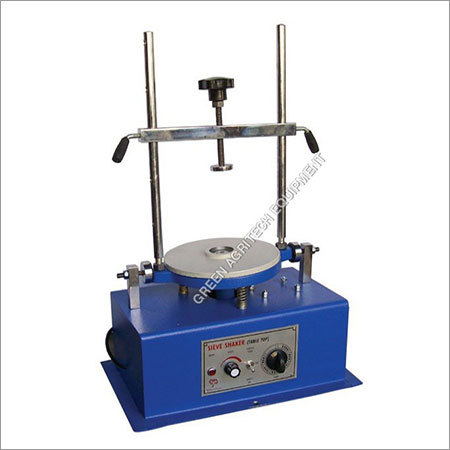
Tell us about your requirement

Price:
Quantity
Select Unit
- 50
- 100
- 200
- 250
- 500
- 1000+
Additional detail
Mobile number
Email

More Products in Seed Grain Testing Lab Equipment Category
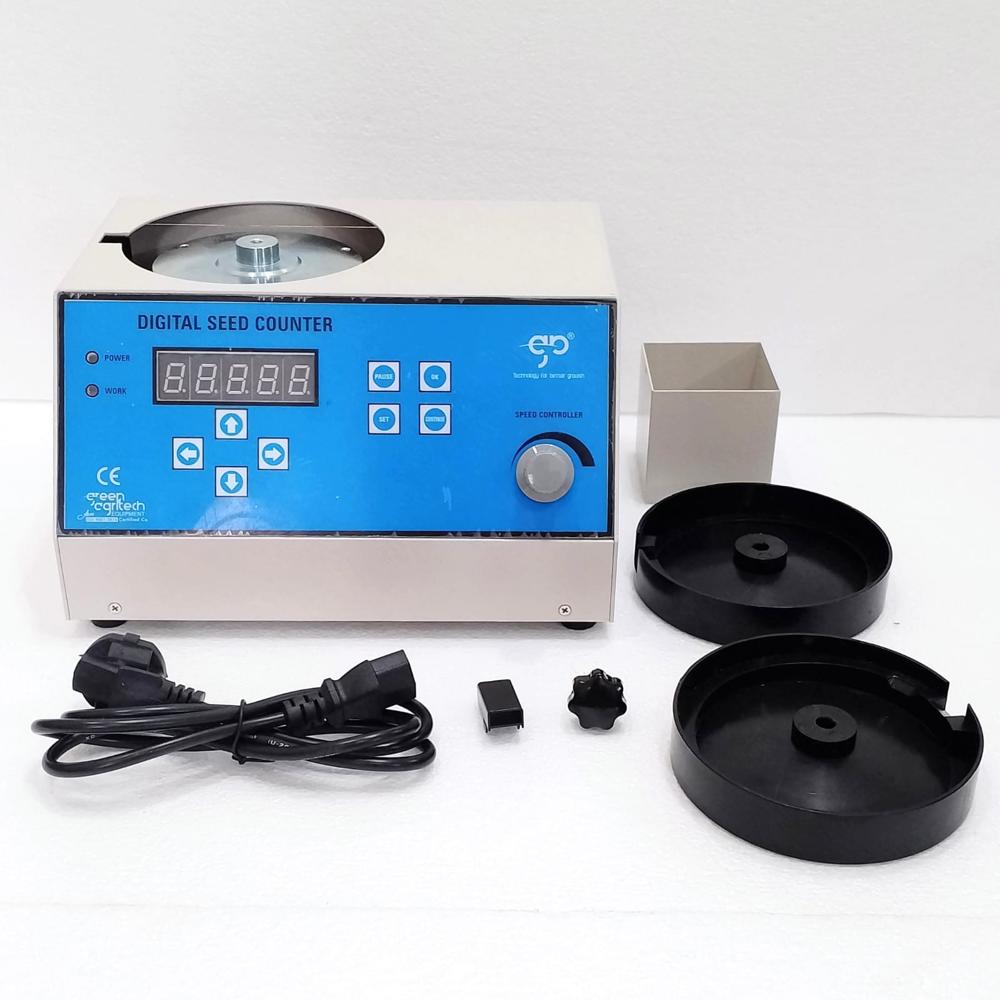
Automatic seed counter
Price 47200.0 INR / Unit
Minimum Order Quantity : 1 Unit
Machine Weight : Approx. 4.5 kg
Product Type : Seed Counters
Accuracy : 99.5%
Material : Mild Steel
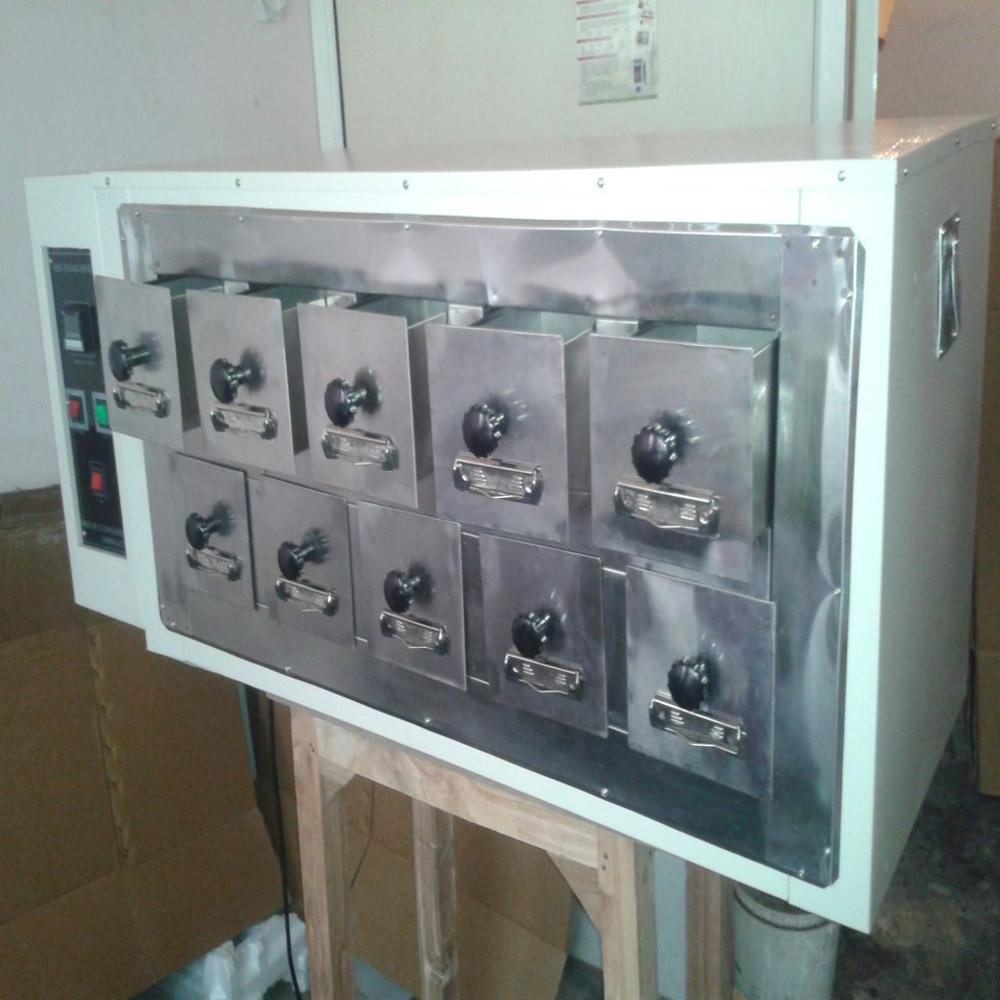
Grain Testing Dryer
Price 38000.0 INR / Unit
Minimum Order Quantity : 1 Unit
Machine Weight : 58458 Kilograms (kg)
Product Type : Dryer
Accuracy : 1C (temperature control)
Material : Mild Steel
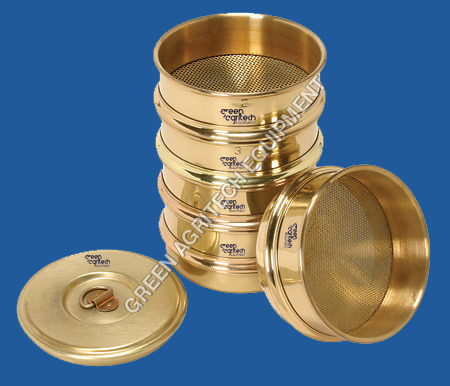
Seed Grading Sieve
Minimum Order Quantity : 1 Set
Machine Weight : Approximately 12 Kg per sieve
Product Type : Sieve
Accuracy : Depends on mesh precision; generally 0.02 mm
Material : Steel
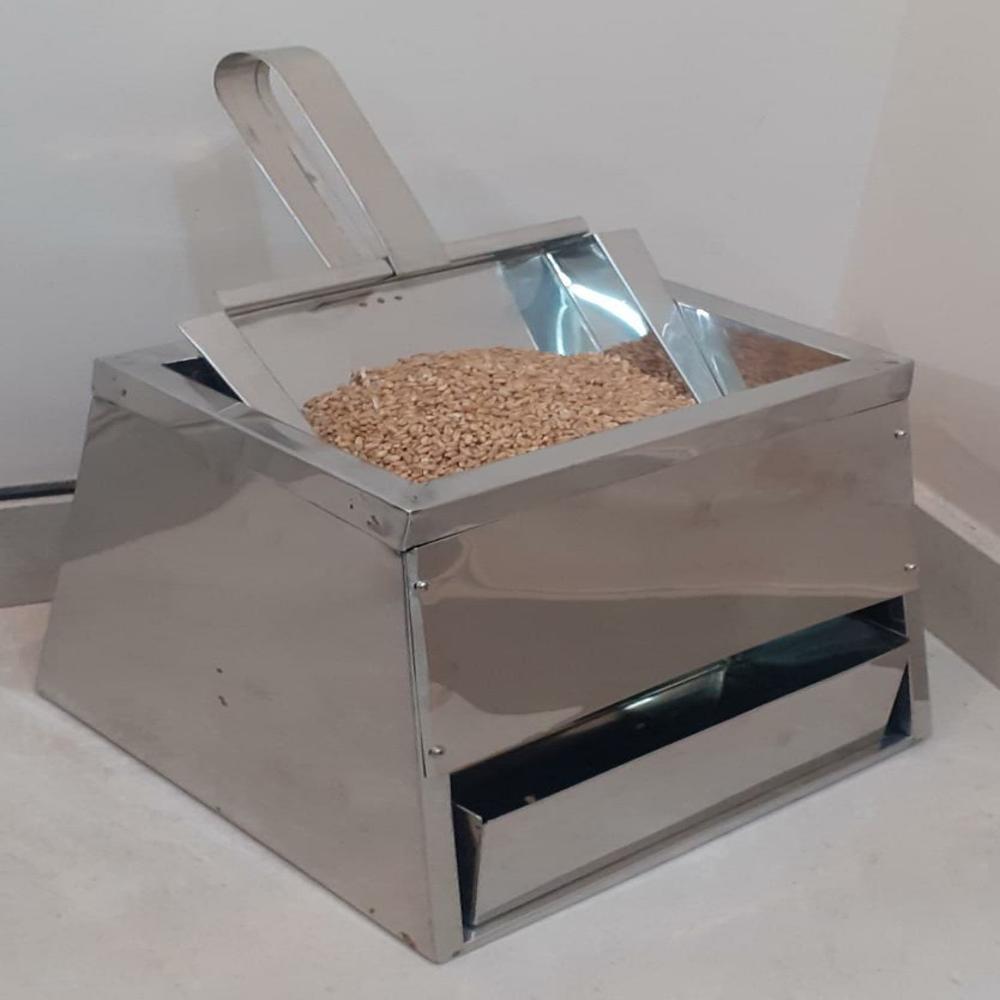
Riffle Grain Divider
Price 7000.0 INR / Kilograms
Minimum Order Quantity : 1 Kilograms
Machine Weight : Approx. 5 kg
Product Type : Divider
Accuracy : High sample division accuracy
Material : Stainless Steel


Contact Details

- 34, Hari Nagar, Behind BD Floor Mill, Ambala - 133001, Haryana, India
- Phone : 07313726490
GREEN AGRITECH EQUIPMENT
GST : 06AEOPV2498H1ZS
GST : 06AEOPV2498H1ZS

- Mr Vijay Verma (M.D.)
- Mobile : 07313726490
- Send Inquiry
 Send Inquiry
 Send Inquiry
 Send SMS
GREEN AGRITECH EQUIPMENT
All Rights Reserved.(Terms of Use)
Developed and Managed by Infocom Network Private Limited.
Developed and Managed by Infocom Network Private Limited.

